

Professional Building Security Checklist UK: How to Improve Premises Safety (2026)
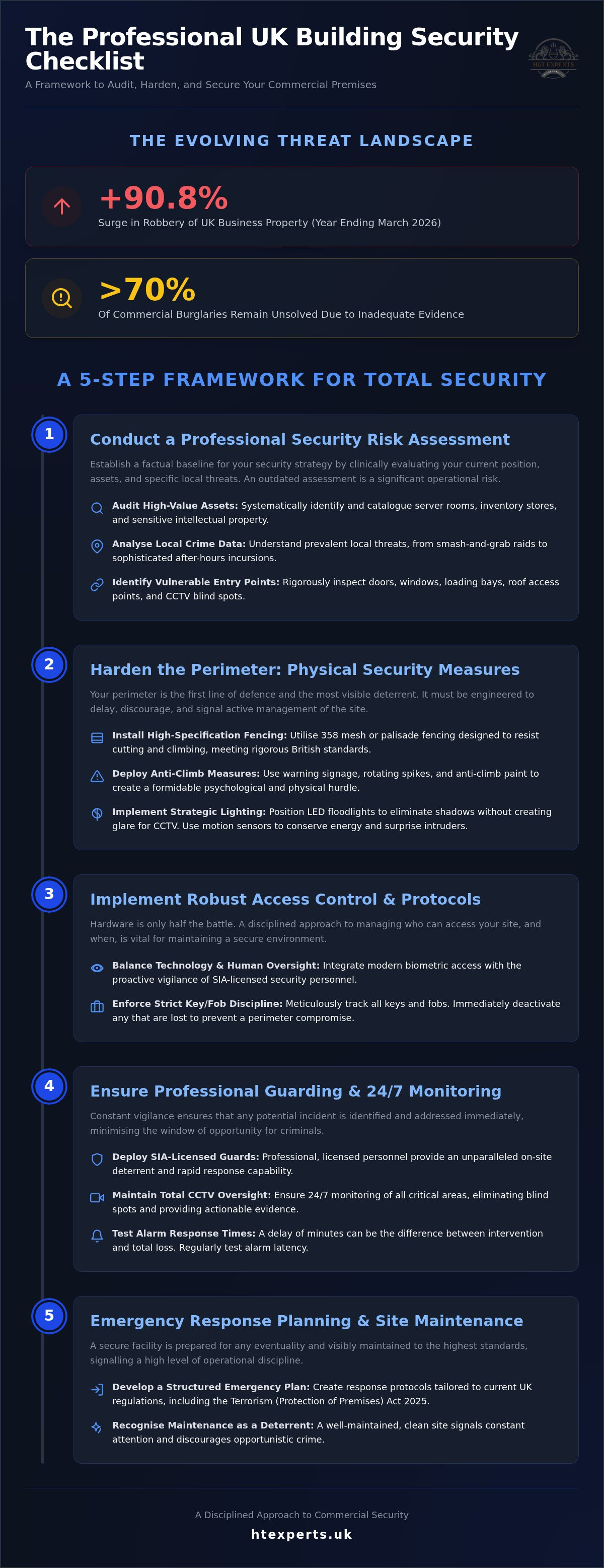
Did you know that robbery of business property in the UK surged by over 90% in the year ending March 2026? This alarming statistic confirms that traditional, reactive measures are failing to protect commercial assets against increasingly sophisticated threats. To maintain operational excellence and safeguard your personnel, you need more than just hardware; you require a rigorous, professional building security checklist UK to identify and neutralise vulnerabilities before they're exploited.
We understand the uncertainty that comes with managing complex premises, particularly regarding out-of-hours incidents and the evolving requirements of the Terrorism (Protection of Premises) Act 2025. It's natural to feel concerned about whether your current protocols meet 2026 standards for insurance compliance and asset protection. This guide delivers a comprehensive, expert-led framework designed to audit and harden your security posture. You'll learn how to seamlessly integrate SIA-licensed human oversight with advanced 24/7 monitoring technology. We'll move from high-level risk assessment to the granular details of emergency response, ensuring your building remains a secure, disciplined environment under all conditions.
Key Takeaways
• Audit your premises with a focus on high-value assets and local incident data to establish a factual baseline for your security strategy.
• Strengthen your perimeter by implementing high-specification fencing and professional lighting to remove the shadows that criminals exploit.
• Implement this professional building security checklist UK to balance biometric access technology with the proactive vigilance of SIA-licensed guards.
• Ensure total oversight through 24/7 security monitoring and a structured emergency response plan tailored to current UK regulations.
• Recognise the link between site maintenance and safety, using specialist cleaning to signal a high level of operational discipline and deterrent.
Conducting a Professional Security Risk Assessment
A robust security strategy begins with a clinical evaluation of your current position. You cannot protect what you haven't identified as a target. This initial phase of your professional building security checklist UK requires a systematic audit of high-value assets, ranging from server rooms and inventory stores to sensitive intellectual property. With business robberies increasing by 90.8% in the year ending March 2026, relying on outdated assumptions is a significant operational risk. You must examine local crime trends to understand if your site is particularly susceptible to specific threats like smash-and-grab raids or sophisticated after-hours incursions.
Evaluating your existing Physical Security Measures is the next logical step. This isn't merely about checking if doors are locked; it's about testing the structural integrity of every barrier. Are your fences climb-resistant? Does your surveillance coverage leave gaps that a determined intruder could navigate? Over 70% of commercial burglaries currently remain unsolved, often because the evidence provided by inadequate systems is insufficient for prosecution. A professional assessment ensures your hardware provides a genuine deterrent rather than a false sense of safety.
Identifying Vulnerable Entry Points
Every building has weak spots that criminals prioritise. Your audit should include a rigorous inspection of:
External Apertures
Test the locking mechanisms on all doors, windows, and loading bays. Pay particular attention to older frames that might be susceptible to prying tools.
Surveillance Gaps
Walk the perimeter to identify blind spots in your CCTV. Shadows, foliage, or poorly positioned cameras often provide cover for unauthorised movement.
Upper-Level Access
Roof access points and skylights are frequently overlooked. Criminals often use these "quiet" routes to bypass ground-floor alarms and sensors.
Evaluating Current Security Protocols
Hardware is only half the battle; human discipline is equally vital. Review how your organisation tracks keys and fobs amongst staff and external contractors. If a fob is lost and not immediately deactivated, your perimeter is effectively compromised. You should also test the latency of your alarm notifications. A delay of even a few minutes can be the difference between a successful intervention and a total loss. If you find that response times are sluggish or staff compliance is wavering, these are clear signs your commercial security is inadequate and requires immediate rectification. A disciplined approach to access management ensures that your security remains a constant, proactive force rather than a reactive afterthought.
Hardening the Perimeter: Physical Security Measures
Perimeter security serves as the physical manifestation of your site's discipline. It's the first barrier an intruder encounters and the most visible deterrent. As part of a comprehensive professional building security checklist UK, your perimeter strategy must focus on delaying and discouraging unauthorised access. High-specification fencing, such as 358 mesh or palisade, should be installed to meet rigorous British standards. These structures aren't merely markers of property lines; they're engineered to resist cutting and climbing, providing a formidable obstacle to any trespasser.
Anti-climb measures, including warning signage and specific toppings like rotating spikes or anti-climb paint, signal that the site is under active management. All gates and vehicle access points must be reinforced with heavy-duty locks and integrated into your monitoring system. A weak gate renders even the most expensive fencing useless. By establishing a clear, hardened boundary, you create a psychological and physical hurdle that forces potential criminals to reconsider their actions.
Strategic Security Lighting
Illumination is a cost-effective method to disrupt criminal behaviour. You should position LED floodlights to eliminate dark corners where intruders might hide or tamper with equipment. It's vital that these lights don't create glare for your CCTV cameras, as overexposure can render video evidence useless. Advanced LED systems now allow for remote dimming and scheduling, providing flexibility for different operational requirements. In low-traffic areas, motion-sensor lighting provides a psychological shock to trespassers whilst conserving energy. Maintaining a consistent lighting schedule during unoccupied hours suggests constant vigilance, even when staff aren't present on-site.
Reinforcing Physical Barriers
Once the perimeter is breached, the building's shell must provide a high level of resistance. Upgrading to PAS 24 rated doors and windows is a standard requirement for many insurance policies and aligns with the UK Building Regulations for Security. These components are tested against common forced-entry techniques to ensure they hold up under pressure. For warehouses or retail units at risk of vehicle-borne incursions, installing static or telescopic bollards is essential to prevent ram-raids. These bollards should be spaced to prevent car access whilst allowing pedestrian movement, balancing safety with accessibility.
Regular inspections are necessary to ensure these barriers remain functional. Environmental damage or subtle signs of tampering can compromise your safety if left unaddressed. For those seeking to integrate these physical measures with expert oversight, partnering with a professional security provider ensures that your hardware is backed by operational readiness. A hardened perimeter is only effective if it's part of a broader, well-managed system of protection, forming the backbone of any professional building security checklist UK.
Implementing Robust Access Control and Internal Protocols
Internal security is as much about managing personnel and movement as it is about hardening the exterior. Whilst the perimeter provides the first line of defence, your professional building security checklist UK must address the risks that exist once an individual is inside. Relying on traditional metal keys is a significant liability; they're easily duplicated and impossible to track. Transitioning to biometric or smart-fob systems allows for precise accountability, ensuring that every entry event is logged and attributed to a specific individual. Adhering to the UK Government Functional Standard for Security ensures that your internal protocols align with national best practices for asset protection and accountability.
Effective access management requires more than just hardware. It demands a strategy of zonification, where the building is divided into tiers of sensitivity. General staff may have access to main offices, but server rooms, HR archives, and executive suites should remain restricted to a select few. You must also establish a rigorous visitor management procedure. Mandatory ID checks and the issuance of temporary, colour-coded passes ensure that unauthorised guests are immediately identifiable. By regularly auditing your access logs, you can identify unusual employee behaviour, such as attempted entries into restricted zones outside of standard working hours, allowing for proactive intervention before a breach occurs.
Modern Access Management Systems
Sophisticated systems now integrate directly with your HR database. This synergy ensures that when an employee leaves the organisation, their access permissions are revoked automatically and across all sites. It's a fail-safe method to prevent disgruntled former staff from retaining entry rights. For delivery entrances, deploy video intercom systems that require visual verification before a door is released. Your system should also provide real-time alerts if a fire exit or sensitive door is left ajar, ensuring that your internal "airlock" remains intact at all times.
Internal Security Culture
No system is impenetrable if the human element is weak. You must organise regular security awareness training to teach staff about the dangers of "tailgating" and the importance of challenging unrecognised individuals. Implement a "clear desk" policy to ensure that sensitive physical documents and hardware aren't left exposed overnight. When staff feel personally invested in the site's safety, they become your most effective surveillance tool. Encourage a culture where reporting suspicious behaviour is viewed as a professional duty rather than a nuisance, creating a vigilant environment that deters internal and external threats alike.
The Role of Professional Guarding and 24/7 Monitoring
Hardware and physical barriers establish a baseline of resistance, but they cannot adapt to fluid, high-stakes situations. A professional building security checklist UK is incomplete without the integration of human intelligence and constant oversight. Deploying SIA-licensed security guards provides a visible, proactive deterrent that technology alone cannot replicate. Since December 2025, SIA licensing has required even stricter vetting, including mandatory safeguarding training and 10-year overseas criminal record checks. This ensures that the personnel protecting your assets are held to the highest standards of professional conduct and reliability.
To achieve total peace of mind, you must utilise 24/7 security monitoring. This service ensures that your premises are never truly unobserved, even during public holidays or weekend shutdowns. By scheduling random mobile patrols, you prevent criminals from identifying and timing your security routines. This element of unpredictability is a powerful tool in asset protection, as it forces potential intruders to contend with an ever-changing environment rather than a static defence. Integrating human intelligence with CCTV allows for the verification of threats before dispatching a response, reducing the risk of false alarms.
Benefits of On-Site Security Personnel
Professional guards offer the unique advantage of immediate, intelligent intervention. Whilst a camera can record a breach, a guard can prevent it. Qualified personnel are trained to manage complex scenarios, such as de-escalating disgruntled visitors or coordinating evacuations during an incident. This hands-on management is essential for maintaining site integrity in demanding environments. You can explore the specific benefits of professional security guarding to understand how dedicated personnel support long-term operational resilience.
Advanced Surveillance and Monitoring
Modern surveillance has moved beyond simple recording. By connecting your CCTV to a remote monitoring centre, you gain the advantage of professional oversight that filters out noise. 42% of security procurement managers now prioritise AI-driven systems, which use thermal imaging and advanced analytics to detect intruders in total darkness. These systems verify threats in real-time, allowing for a rapid dispatch of a response team or emergency services. This synergy between human expertise and sophisticated methodology ensures that every alert is handled with the appropriate level of urgency and discipline.
Don't leave your site's safety to chance. Contact H&T Experts Ltd to discuss how our SIA-licensed guarding and 24/7 monitoring can secure your UK premises.
Emergency Response Planning and Site Maintenance
A security strategy is only as strong as its failure state. Even with hardened perimeters and SIA-licensed guards, you must prepare for the moment a breach or incident occurs. Developing a detailed emergency security response plan ensures that your team acts with precision rather than panic. This document should account for various scenarios, including fire, medical emergencies, and unauthorised incursions, providing a clear roadmap for every stakeholder. To maintain operational readiness, you must also conduct regular tests of all alarm systems and panic buttons. A faulty sensor or a silent alarm that fails to trigger can lead to catastrophic losses during a real-world event.
Operational excellence requires a professional relationship with local emergency services and your security partners. Sharing site maps and access protocols with the relevant authorities before an incident occurs can significantly reduce response times. This collaborative approach is a vital component of any professional building security checklist UK, as it ensures that external responders are not delayed by a lack of site-specific knowledge. Regular drills and protocol reviews keep these lines of communication open and effective.
Developing a Rapid Response Protocol
Efficiency during a crisis depends on pre-defined communication lines that bypass standard bureaucracy. Out-of-hours alerts must be routed to individuals with the authority to act immediately, whether that involves dispatching a response team or initiating a site lockdown. Assign specific roles to your staff to ensure everyone knows their responsibilities during building evacuations. A rapid response protocol is a pre-planned, documented sequence of actions triggered by a security breach. This discipline prevents confusion and ensures that the safety of personnel and assets remains the primary objective throughout the duration of an incident.
The Link Between Maintenance and Security
Many organisations overlook the psychological impact of site condition on criminal behaviour. The "broken windows" theory suggests that visible signs of neglect, such as graffiti, litter, or unrepaired damage, signal a lack of active oversight. Criminals are statistically more likely to target a building that appears unmanaged or abandoned by its guardians. You should address these issues immediately to maintain the perception of a high-security environment. Utilising specialist cleaning services UK ensures that your premises always reflect the rigorous standards of your broader security protocols.
Landscaping also plays a critical role in your professional building security checklist UK. Overgrown foliage provides ideal cover for intruders attempting to bypass surveillance or tamper with entry points. Keep all greenery trimmed to maintain clear sightlines across the perimeter and eliminate potential hiding spots. By integrating site maintenance with your security strategy, you create an environment that is both physically and psychologically resilient. A clean, well-lit, and meticulously maintained site is a powerful deterrent that reinforces the message of constant vigilance and professional pride.
Securing Your Operational Future
Effective security management in 2026 requires a transition from reactive measures to a culture of constant readiness. By implementing this professional building security checklist UK, you establish a disciplined environment where physical barriers, biometric access, and SIA-licensed guarding work in unison. Site integrity is also maintained through meticulous upkeep; specialist cleaning and landscaping are not just aesthetic choices but essential components of a proactive deterrent that signals high-level oversight to any potential intruder.
With over 25 years of operational expertise, H&T Experts Ltd provides the steadfast leadership needed to protect your assets. Our national UK coverage and 24/7 monitoring capabilities ensure that your premises remain under expert oversight at all times, regardless of the hour. If you're ready to harden your site and achieve total peace of mind, we invite you to request a professional security consultation from H&T Experts Ltd. Your safety is our primary obligation, and we're prepared to help you build a more resilient and secure future for your organisation.
Frequently Asked Questions
How often should a building security audit be conducted in the UK?
You should conduct a comprehensive security audit at least once every twelve months to ensure your protocols remain effective. If your business undergoes significant operational changes or if local crime rates fluctuate, bi-annual reviews are highly recommended. Regular assessments allow you to identify new vulnerabilities before they're exploited. Following a professional building security checklist UK helps maintain a consistent standard of oversight and ensures your safety measures evolve alongside modern threats.
Is manned guarding more effective than CCTV for commercial buildings?
Manned guarding is generally more effective as a proactive deterrent because it allows for immediate, intelligent intervention. Whilst CCTV provides essential evidence and remote oversight, it cannot physically prevent an intruder from entering a building. A professional guard can de-escalate complex situations, manage access, and provide an instant response to alarms. The most resilient strategy always combines human vigilance with advanced surveillance technology for total site integrity.
What are the legal requirements for CCTV signage in UK business premises?
UK law requires you to display clear, legible signs in all areas where CCTV is in operation. These signs must inform individuals that they're being recorded and state the purpose of the surveillance, such as crime prevention or public safety. You must also include the contact details of the organisation responsible for the data. This transparency is a mandatory requirement under the Data Protection Act 2018 and ensures your surveillance remains legally compliant.
Can professional security services help reduce my business insurance premiums?
Implementing professional security measures can often lead to a reduction in your business insurance premiums. Insurers view SIA-licensed guarding and 24/7 monitoring as significant risk-reduction factors that protect their interests. By demonstrating that your premises are actively managed and protected, you lower the statistical likelihood of a successful claim. You should consult with your insurance provider to confirm which specific security enhancements will have the greatest impact on your policy costs.
What is the difference between a standard alarm and a monitored security system?
A standard alarm relies on a local audible siren to alert passers-by, whereas a monitored system is connected to a professional response centre. When a monitored alarm is triggered, a signal is instantly sent to a specialist team who can verify the threat and dispatch emergency services. This ensures a rapid response even when the building is unoccupied. Monitored systems provide a much higher level of asset protection than local sirens alone.
How do I choose the right SIA-licensed security provider for my firm?
You should prioritise providers with extensive operational experience and a proven track record in your specific industry. Ensure the firm holds the appropriate SIA Approved Contractor Status and that all personnel are individually licensed. Look for a partner that offers integrated solutions, such as 24/7 monitoring and emergency response. A disciplined provider will be transparent about their training standards and provide clear lines of accountability for their guarding staff at all times.
What happens if a security breach occurs during out-of-office hours?
If a breach occurs during out-of-office hours, your monitored security system will immediately alert a remote response team. This team follows a pre-defined protocol, which typically involves visual verification via CCTV and the dispatch of a mobile patrol or emergency services. Having a professional building security checklist UK ensures that your out-of-hours response is methodical and efficient. This rapid intervention minimises potential damage and increases the likelihood of apprehending intruders before they escape.
How does site cleanliness and maintenance impact overall building security?
Site cleanliness significantly impacts security by signalling that the premises are under active, disciplined management. A well-maintained building with no graffiti or litter suggests a high level of oversight, which acts as a psychological deterrent to criminals. Conversely, neglect can invite unwanted attention by suggesting that security protocols are lax. Integrating specialist cleaning with your security strategy ensures that your site always reflects a professional and secure standard that discourages criminal behaviour.





Ready to Experience Unparalleled Security Solutions?
H&T Experts Ltd is here to ensure your peace of mind. Connect with us today and take the first step towards a safer tomorrow.