

Emergency Biohazard Cleaning UK: A Professional Guide to Specialist Sanitation
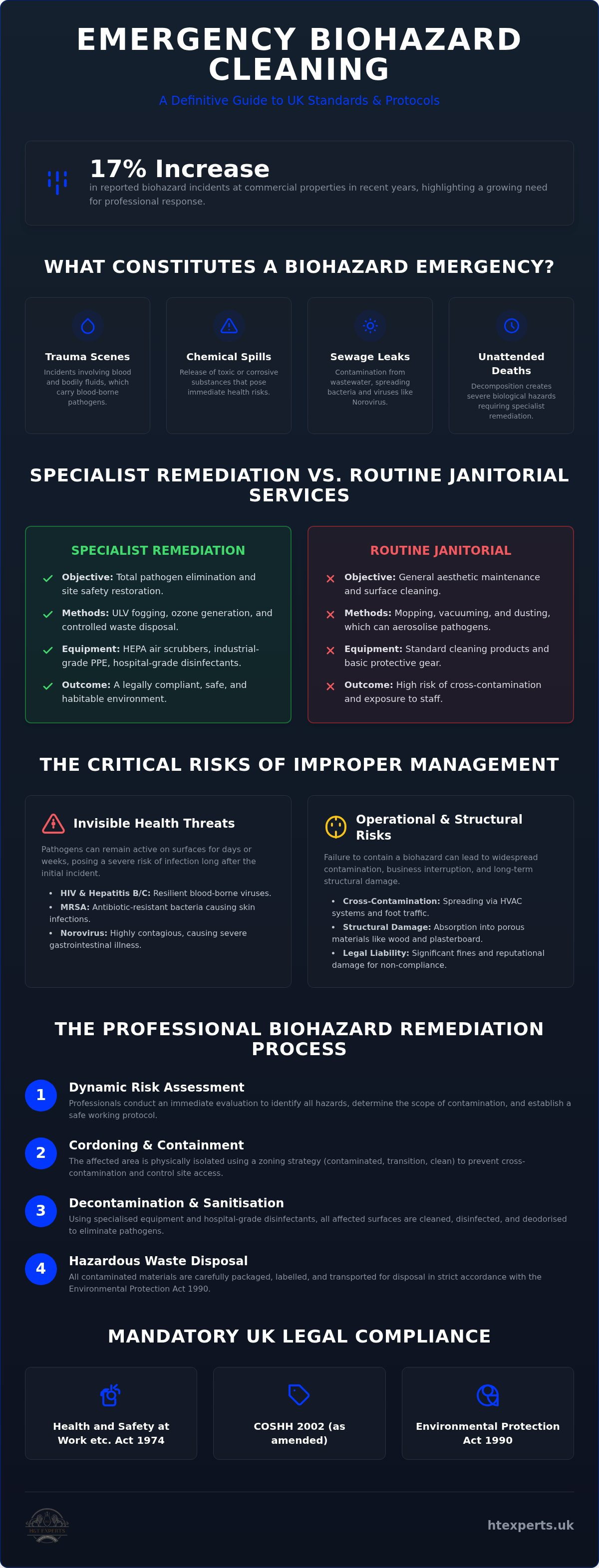
When a biohazard emergency occurs on your premises, the margin for error is non-existent. It isn't just about the visible contamination; it's about the invisible pathogens and the rigid legal framework that governs emergency biohazard cleaning UK operations. You're likely feeling the weight of responsibility for public safety whilst worrying about strict HSE compliance. We understand that managing a traumatic or dangerous situation is incredibly stressful, especially as biohazard incidents in commercial properties have risen by 17% in recent years.
This guide provides a definitive look at specialist sanitation standards, detailing the critical protocols and legal requirements you must follow to restore site safety. You'll discover the professional processes involved in hazardous waste disposal and how to ensure your organisation remains fully compliant with COSHH and the Environmental Protection Act 1990. We'll preview the essential steps for a discreet, professional resolution that protects both your reputation and the people under your care. From understanding the duty of care to the technical specifics of decontamination, this article outlines everything required to manage a crisis with total confidence.
Key Takeaways
• Identify the specific scenarios that necessitate specialist intervention, including trauma scenes and chemical spills, to ensure immediate site safety.
• Recognise the critical health and structural risks posed by pathogens like MRSA and Hepatitis, which require professional-grade decontamination to mitigate.
• Understand the technical steps of the remediation process, from conducting dynamic risk assessments to implementing effective cordoning and containment.
• Ensure total compliance with UK legislation, specifically the Health and Safety at Work etc. Act 1974 and COSHH 2002 (as amended) regulations.
• Discover the operational advantages of an integrated response that combines security guarding with emergency biohazard cleaning UK to manage high-stakes incidents.
Understanding Emergency Biohazard Cleaning in the UK
Biohazards are biological substances that pose a direct threat to living organisms. They require a level of intervention that far exceeds standard sanitation. In the context of emergency biohazard cleaning UK, these substances encompass blood, bodily fluids, sewage, and chemical contaminants. Common emergency scenarios include trauma scenes, sewage leaks, and unattended deaths. These situations are often volatile and emotionally charged. Standard cleaning methods are dangerous in these environments. They lack the chemical potency to neutralise pathogens and can expose staff to significant health risks. Professional remediation relies on specialised equipment, such as industrial-grade ozone generators, HEPA air scrubbers, and ULV foggers. Combined with hospital-grade disinfectants, these tools ensure every surface is rendered safe and every airborne risk is mitigated.
What Qualifies as a Biohazard Emergency?
A biohazard emergency is defined by the presence of high-risk materials that require immediate professional oversight. These include blood-borne pathogens like HIV and Hepatitis, zoonotic diseases, and toxic chemicals. When managing emergency biohazard cleaning UK, identifying the specific category of the hazard is the first step toward a safe resolution. The threshold for an 'emergency' is reached the moment a site poses a risk of exposure or cross-contamination. Immediate action is required to cordon off the area and prevent unauthorised access. If left unaddressed, these hazards don't just threaten public safety; they halt business continuity and create substantial legal liabilities for the organisation. Prompt response is the only way to mitigate these risks effectively.
Specialist Cleaning vs. Routine Janitorial Services
Specialist remediation is fundamentally different from routine janitorial work. The primary distinction lies in the level of training, the rigour of the risk assessment, and the standard of Personal Protective Equipment (PPE) utilised. Routine cleaning focuses on aesthetic maintenance. Specialist cleaning focuses on total pathogen elimination. Standard methods, such as vacuuming or mopping, can actually aerosolise or spread contaminants, worsening the situation. This is why Crime scene cleanup and biohazard remediation are treated as technical disciplines. Biohazard remediation is a specialised technical process designed to transform a contaminated site back into a safe, habitable environment through rigorous disinfection and hazardous waste management. It requires a disciplined approach that combines advanced methodology with a deep understanding of health and safety regulations.
The Critical Risks of Improper Biohazard Management
Attempting to manage a biohazard incident without professional oversight introduces a cascade of preventable risks. It isn't merely a matter of hygiene; it's a significant health and safety liability that can have devastating consequences for your organisation. When emergency biohazard cleaning UK protocols are ignored, the site remains a focal point for infection and structural decay. Relying on untrained staff to handle hazardous materials is a gamble that rarely pays off.
Pathogens and Biological Hazards
Pathogens such as HIV, Hepatitis B and C, MRSA, and Norovirus are remarkably resilient. These biological threats can survive on non-porous surfaces for days or even weeks if they aren't professionally neutralised. The danger is often invisible. For instance, improper scrubbing techniques can lead to aerosolisation, where pathogens become airborne and are easily inhaled by anyone in the vicinity. This creates a high risk of secondary infection. Adhering to the Control of Substances Hazardous to Health (COSHH) Regulations is not optional; it's a legal necessity to ensure that these substances are contained and destroyed using the correct chemical agents.
Cross-Contamination and Site Integrity
Maintaining site integrity requires more than just cleaning the immediate area of impact. Biohazards are mobile. They travel through HVAC systems and are spread by foot traffic long before the alarm is raised. Professional responders use a "zoning" strategy to prevent this spread, establishing clear boundaries between contaminated, transition, and clean areas. Without this discipline, a small spill can quickly contaminate an entire facility. Porous materials such as plasterboard, wood, and concrete can absorb hazardous fluids. If these materials aren't removed or deep-cleaned, they will harbour bacteria and produce persistent odours, eventually compromising the building's structural integrity.
Beyond the physical dangers, the psychological impact on employees cannot be overstated. Working in a space where a traumatic event was poorly remediated creates a climate of fear and distrust. This often leads to long-term reputational damage and potential legal action. Ensuring a discreet and total resolution through specialist cleaning services is the only way to protect your people and your brand. A professional response provides the reassurance that the site is not just clean, but safe. This level of oversight is a core component of professional emergency biohazard cleaning UK protocols.
The Professional Biohazard Remediation Process
A professional response to biological contamination is defined by its methodical precision. It isn't a simple cleaning task; it's a multi-stage technical operation designed to eliminate risk and restore site safety. When executing emergency biohazard cleaning UK, specialists follow a rigid five-step framework that ensures no contaminant is left unaddressed. This discipline begins with a rapid site assessment and a dynamic risk assessment (DRA) to identify immediate threats to life and health, ensuring the team is prepared for the specific biological or chemical profile of the scene.
Assessment and Site Containment
Effective containment is the cornerstone of a successful remediation. We establish distinct 'Hot', 'Warm', and 'Cold' zones to isolate the hazard and prevent cross-contamination into safe areas. This phase involves identifying all affected materials, including hidden seepage behind walls or under flooring, which often goes unnoticed by the untrained eye. Coordinating with emergency security response teams ensures that site access is strictly controlled, maintaining the integrity of the cordoned area whilst specialists work. This synergy between security and sanitation is vital for managing high-traffic commercial environments.
Once the site is secured, the systematic removal of biohazardous materials and fluids begins. This isn't merely about disposal; it involves the categorisation and secure packaging of hazardous waste in accordance with UK regulations. Every item removed is tracked through a clear chain of custody, ensuring legal accountability for the waste's final destination. This rigorous approach prevents the accidental release of pathogens during transport and ensures that the site is physically cleared of all primary contaminants.
Disinfection and Sanitisation Techniques
The sanitisation phase utilises advanced methodology to ensure total room coverage. We employ ULV (Ultra-Low Volume) fogging, which disperses a fine mist of disinfectant into every crevice, neutralising airborne and surface-level pathogens simultaneously. Unlike standard cleaning, this process is scientifically validated. We use ATP (Adenosine Triphosphate) testing to verify the absence of biological matter. By measuring organic residue at a molecular level, we provide empirical proof that the site is safe for re-entry, filling the gap often left by less sophisticated services.
The final stage involves professional deodorisation to remove any lingering traces of organic decomposition. This ensures the environment is restored not just to a safe state, but to a habitable one. Only after these rigorous checks are complete is the final verification issued and the site handed back to the client with a full audit trail. This level of oversight is what separates professional emergency biohazard cleaning UK from basic janitorial services, providing the peace of mind that comes from a steadfast commitment to operational excellence.
Legal Compliance and Health & Safety Standards
Legal compliance in the aftermath of a biological incident is not a matter of choice; it is a statutory requirement. The Health and Safety at Work etc. Act 1974 remains the foundational piece of legislation, placing a clear burden on employers to ensure the health, safety, and welfare of their staff and the public. When a biohazard emergency occurs, this duty becomes acute. Failure to secure a site or attempting to clean it with unqualified personnel can lead to severe legal penalties, including heavy fines and criminal prosecution. Professional emergency biohazard cleaning UK protocols are designed specifically to meet these rigorous legal benchmarks.
Statutory Obligations for UK Businesses
Businesses must produce technically accurate Risk Assessments and Method Statements (RAMS) before any remediation work commences. These documents are the operational blueprint for a safe response. They must account for the Control of Substances Hazardous to Health (COSHH) Regulations, which dictate how biological agents are identified, handled, and neutralised. Engaging specialist cleaning services UK ensures that these statutory requirements are met with precision. It moves the burden of liability from the business owner to the specialist contractor, providing a vital layer of professional protection and ensuring that all work is conducted within the bounds of the law.
Safe Disposal of Hazardous Waste
The Environmental Protection Act 1990 establishes a strict "Duty of Care" for all waste producers. In an emergency biohazard cleaning UK scenario, waste is classified under specific codes within the European Waste Catalogue (EWC). This classification is critical. Biohazardous matter cannot be disposed of in general waste streams. It must be segregated, correctly packaged, and transported by a licensed waste carrier to a specialised facility. This ensures that the waste is managed safely from the moment it is collected until its final destruction.
Every gram of hazardous material must be tracked through a clear chain of custody. This journey is documented via a Duty of Care certificate, which serves as your legal proof that the waste was handled and disposed of responsibly, typically through high-temperature incineration. This process ensures zero environmental impact and provides the necessary audit trail for health and safety inspections. Without this documentation, your organisation remains legally vulnerable. To ensure your premises are restored in full alignment with UK law, contact H&T Experts Ltd for an immediate, compliant response.
Securing Your Premises with H&T Experts Ltd
H&T Experts Ltd brings over 25 years of operational experience to every emergency biohazard cleaning UK project. We don't view sanitation as a standalone task. Instead, we operate as a steadfast force in crisis management, providing a unique dual-expertise approach that combines security guarding with specialist cleaning. This integration is essential when managing high-stakes environments where site control is just as critical as decontamination. Our national coverage ensures that we're ready to respond 24/7, providing a stable and capable presence when you need it most. We've built our reputation on being a vigilant guardian for our clients, balancing high-stakes responsibility with a composed, business-like delivery.
The Synergy of Security and Specialist Cleaning
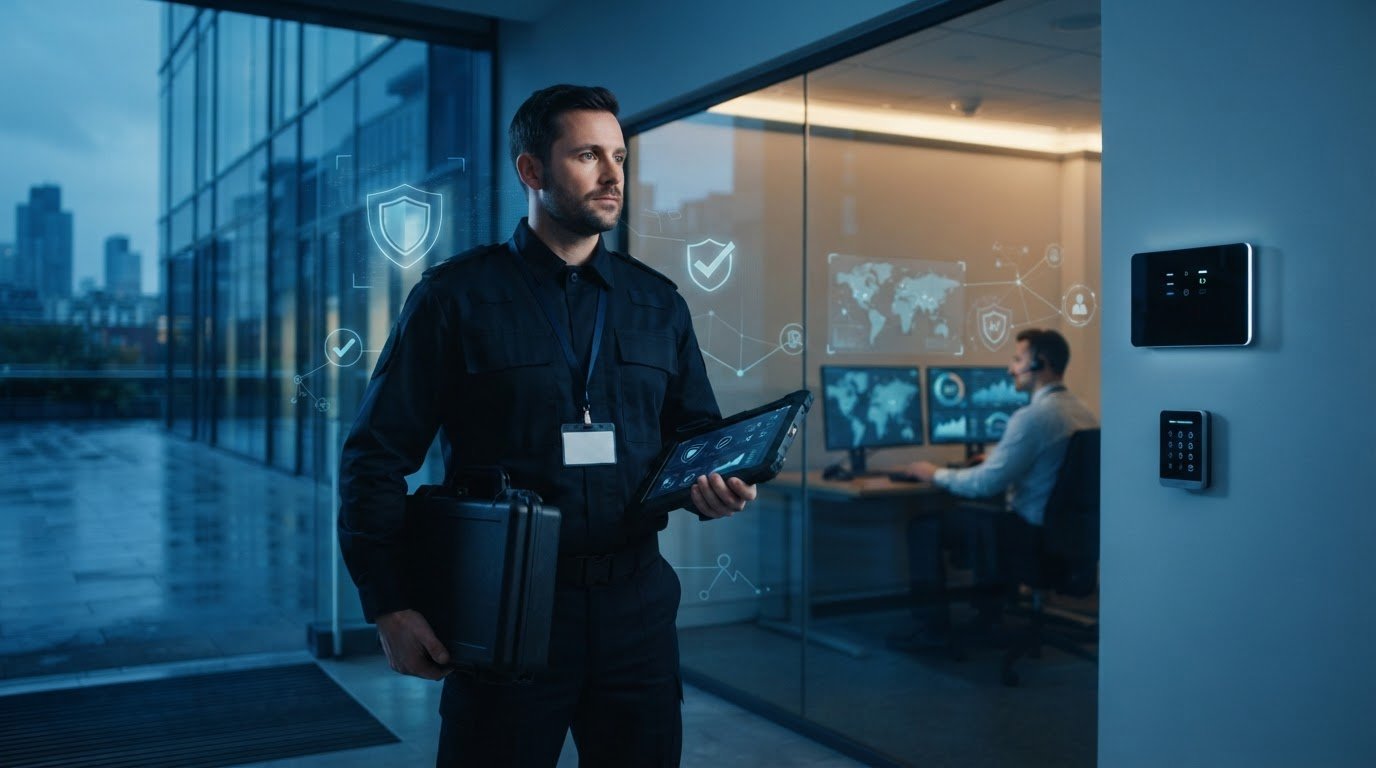
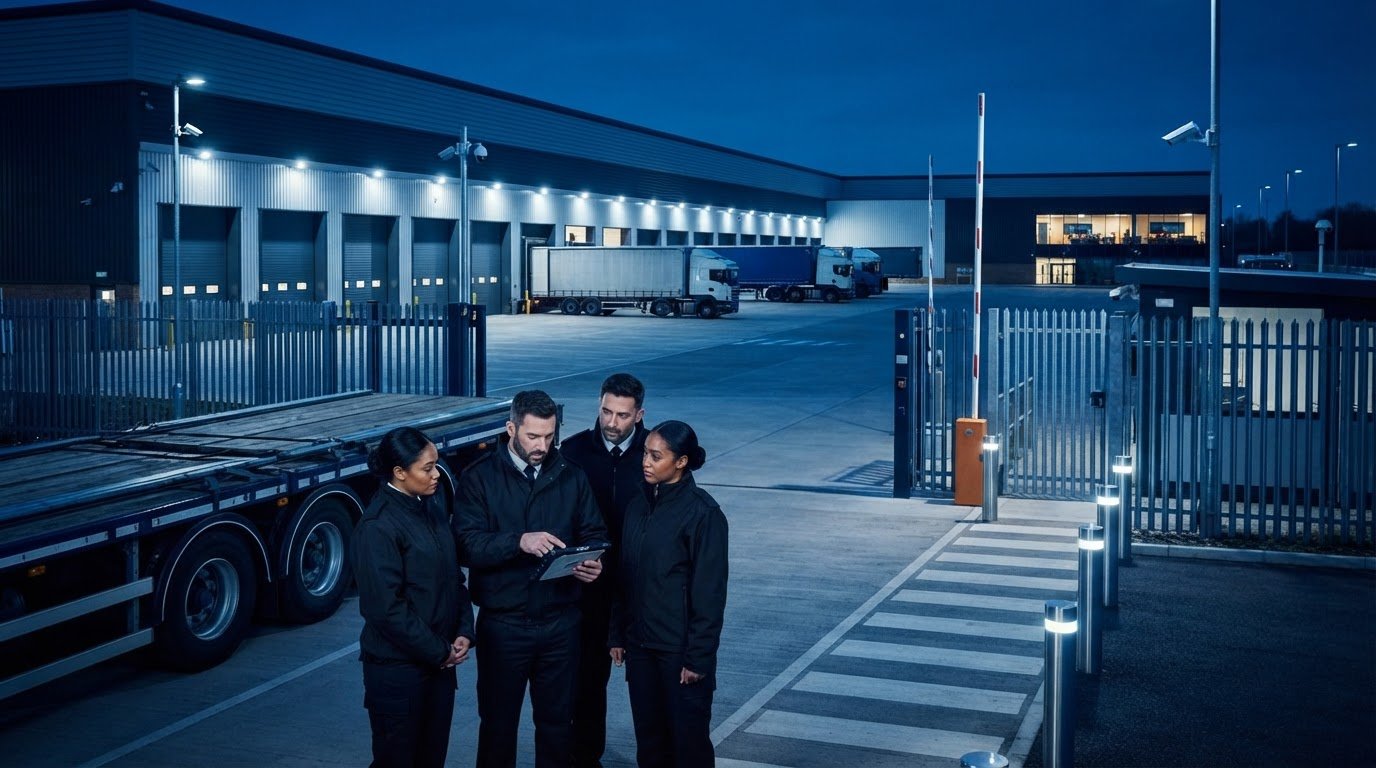
Our background in security guarding informs every aspect of our cleaning protocols. It instils a level of discipline and methodical precision that's often missing from standard services. In sensitive trauma or crime scene remediation, managing site access is paramount. Our personnel are trained to secure the perimeter, ensuring that only authorised individuals enter the contaminated zone. This prevents cross-contamination and maintains the legal integrity of the site. Dealing with a single point of accountability provides immense peace of mind during a crisis. You aren't managing multiple contractors; you're partnering with a specialist entity that takes full responsibility for both the physical security and the biological safety of your premises. This synergy ensures that the transition from an active emergency to a safe, restored environment is seamless and controlled.
Immediate Action and Crisis Management
Time is a critical factor in any biohazard event. We provide fast-tracked quoting and rapid deployment across the United Kingdom to ensure that remediation begins without delay. Our operations are conducted with the utmost discretion to protect your brand's reputation and minimise public concern. We understand that a visible crisis can have long-term commercial implications if handled poorly. Our teams arrive prepared for any situation, utilising advanced technology and rigorous training to resolve the emergency efficiently. We maintain a high register of formality and professional pride in everything we do. Our commitment to operational integrity and transparency ensures that every action we take is documented, providing you with a clear audit trail and total confidence in the safety of your site. We project the personality of a seasoned leader, valuing hands-on management and clear lines of responsibility to ensure your business continuity is restored as quickly as possible.
Restoring Safety and Compliance Through Specialist Expertise
Restoring site safety after a biological emergency is a complex operation that leaves no room for hesitation. Successful remediation depends on more than simple disinfection; it requires a deep understanding of COSHH regulations and the disciplined execution of containment protocols. By integrating security guarding with technical sanitation, you ensure that the site remains secure whilst the hazard is professionally neutralised. This holistic approach protects your staff, the public, and your organisation's reputation from the long-term risks of improper management.
H&T Experts Ltd provides the steadfast force needed to navigate these high-stakes situations. With over 25 years of operational experience and a status as licensed waste carriers, we offer the technical expertise and legal accountability required for emergency biohazard cleaning UK. Our teams are prepared to deploy 24/7, providing the reassurance that your premises will be restored to total safety and compliance. We deliver the synergy between human expertise and advanced methodology that modern crisis management demands.
Contact H&T Experts Ltd for immediate specialist cleaning support and regain control of your environment with the help of a vigilant, professional partner. You can trust our team to manage every detail with integrity and precision.
Frequently Asked Questions
What is considered a biohazard in the UK?
Biological substances that pose a threat to health, including blood, bodily fluids, sewage, and certain chemical contaminants, are considered biohazards. In the UK, these are categorised under COSHH and the European Waste Catalogue. They include pathogens like HIV, Hepatitis, and Norovirus. Any material contaminated with these substances requires specialist handling to prevent infection and environmental damage. Professional oversight ensures these materials are managed in full compliance with national safety standards.
Can my regular cleaners handle a biohazard emergency?
Standard janitorial staff lack the training, specialist PPE, and hospital-grade chemicals required for safe remediation. Attempting to clean biohazards with routine methods often spreads contaminants through aerosolisation or cross-contamination. This creates significant health risks for your staff and potentially violates the Health and Safety at Work etc. Act 1974. Professional intervention is a legal and safety necessity for any organisation facing a biological or chemical incident on their premises.
How quickly can an emergency biohazard team arrive on site?
Response times vary by location, but 24/7 specialist providers typically offer rapid deployment across the UK. For emergency biohazard cleaning UK, the goal is immediate site containment to prevent the spread of pathogens. Rapid intervention is critical for maintaining business continuity and protecting public safety. You should confirm specific response times when initiating the service request to ensure site integrity is maintained and risks are mitigated immediately.
Is biohazard cleaning covered by commercial insurance?
Many commercial property insurance policies include coverage for biohazard remediation, particularly following criminal events, fires, or floods. You should review your specific policy wording or consult your broker to confirm eligibility. Professional cleaners often provide the detailed documentation and audit trails required by insurers to process these claims successfully. This ensures that the costs of restoring site safety are managed effectively and that your organisation remains fully compliant with its obligations.
What are the legal requirements for disposing of hazardous waste?
Hazardous waste must be segregated, tracked, and transported by a licensed waste carrier in accordance with the Environmental Protection Act 1990. You're legally required to obtain a Duty of Care certificate for all biohazardous materials removed from your premises. This document serves as proof of compliant disposal, typically via high-temperature incineration, and must be retained for your health and safety records. It provides an essential paper trail for regulatory oversight and accountability.
How is a site verified as safe after a biohazard cleanup?
Site safety is verified through empirical testing methods, most commonly ATP (Adenosine Triphosphate) testing. This process detects organic matter at a molecular level, providing scientific proof that surfaces are decontaminated. A professional team will also conduct a final visual inspection and provide a completion certificate. This documentation is vital for demonstrating your compliance with HSE standards and ensuring the area is safe for re-entry. It provides the necessary reassurance for staff and the public.
What PPE is required for professional biohazard remediation?
Technicians must wear specialised Personal Protective Equipment, including chemical-resistant suits, nitrile gloves, and full-face respirators with P3 filters. This equipment is mandated by the PPE at Work (Amendment) Regulations 2022 to prevent exposure to pathogens and toxic chemicals. The specific level of protection is determined by a dynamic risk assessment conducted at the start of the emergency biohazard cleaning UK process. This ensures that the team can operate safely in high-risk environments whilst maintaining site integrity.
Does biohazard cleaning remove smells permanently?
Professional remediation removes odours permanently by eliminating the biological source of the smell. We use advanced techniques like ULV fogging and ozone treatment to neutralise odour molecules at their core rather than masking them with fragrances. This is essential for scenarios involving unattended deaths or sewage leaks where organic decomposition has occurred. Total decontamination is the only way to ensure a habitable environment and restore the site to its original state for safe re-entry.
Ready to Experience Unparalleled Security Solutions?
H&T Experts Ltd is here to ensure your peace of mind. Connect with us today and take the first step towards a safer tomorrow.